HS codes
HS codes: How to find the right code for your product
An HS code is the number customs uses to identify your product and set its duty rate. The first six digits are the same in almost every country. India adds two more digits (an 8-digit ITC-HS code) and the US adds four more (a 10-digit HTS code). You need the right code at both ends. A wrong one means paying the wrong duty, a customs hold, or penalties later.

Classification sounds like an admin task. In practice it is one of the most expensive things to get wrong in international shipping, because the mistake often surfaces months after the goods have been sold.
How an HS code is built
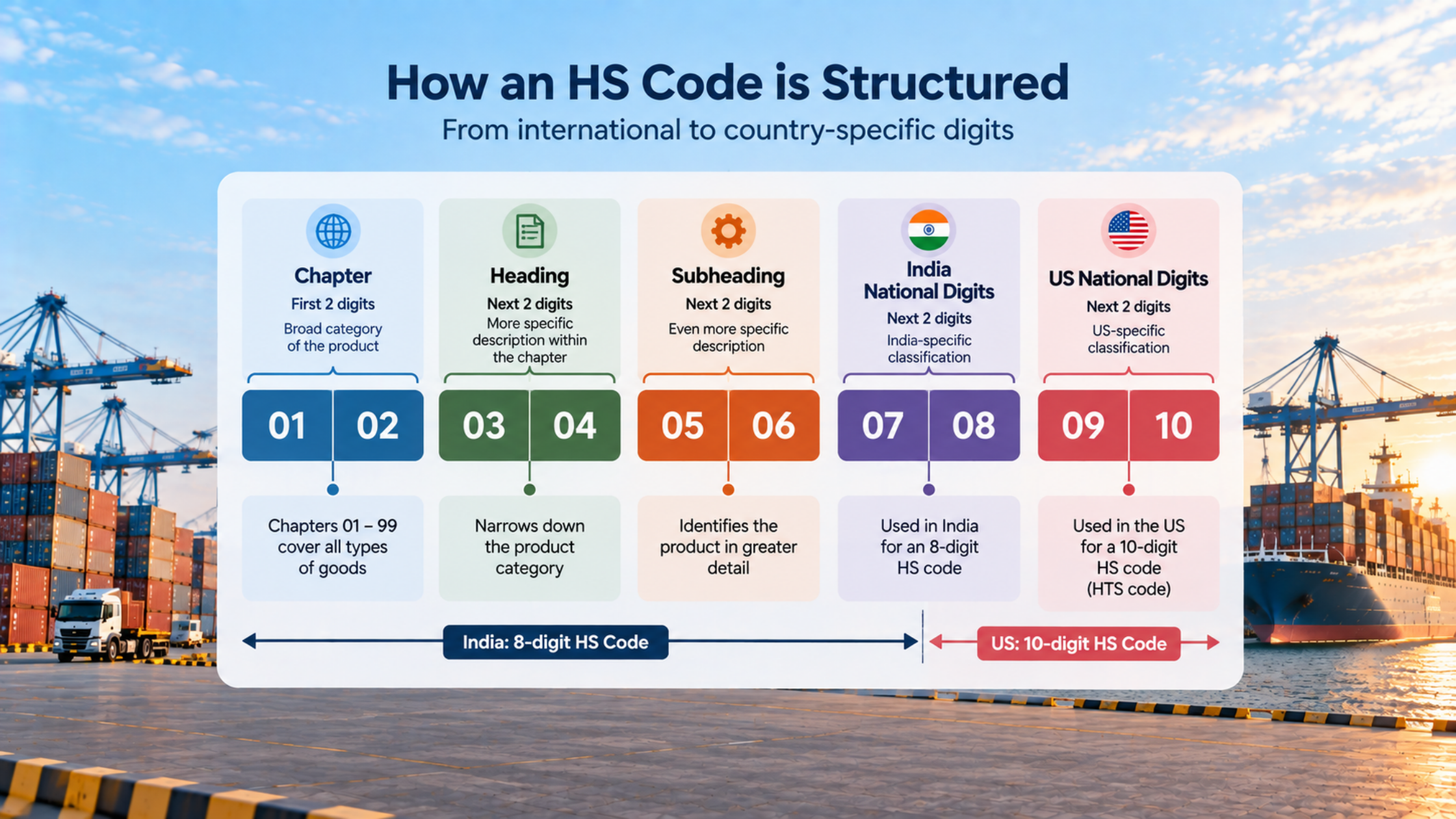
The Harmonized System is managed by the World Customs Organization and used by more than 200 countries.

| Digits | What they mean | Example: cotton men's T-shirt |

| 2 | Chapter | 61: knitted apparel |
| 4 | Heading | 6109: T-shirts and vests, knitted |
| 6 | Subheading (international) | 6109.10: of cotton |
| 8 | India's ITC-HS national level | Set by India |
| 10 | US HTS statistical level | Set by the US |

The first six digits should match on both sides. After that, India and the US each go their own way. That is why an Indian exporter cannot simply copy the Indian code onto a document meant for US customs.
Why the right code matters
Duty. The code sets the duty rate. Two very similar products can sit in different codes with very different rates.

Additional duties. In 2026, US duties on imports have changed several times. Many of the extra tariffs apply by country of origin and by HS code, with exemptions for certain codes. The code decides which of these apply to you.

Regulations. The code tells customs whether other agencies need to see the shipment, such as food, drug or product safety regulators.

Export incentives. In India, benefits such as RoDTEP are linked to the code on your shipping bill.

Statistics and audits. A code that does not match the goods is a red flag for an examination.
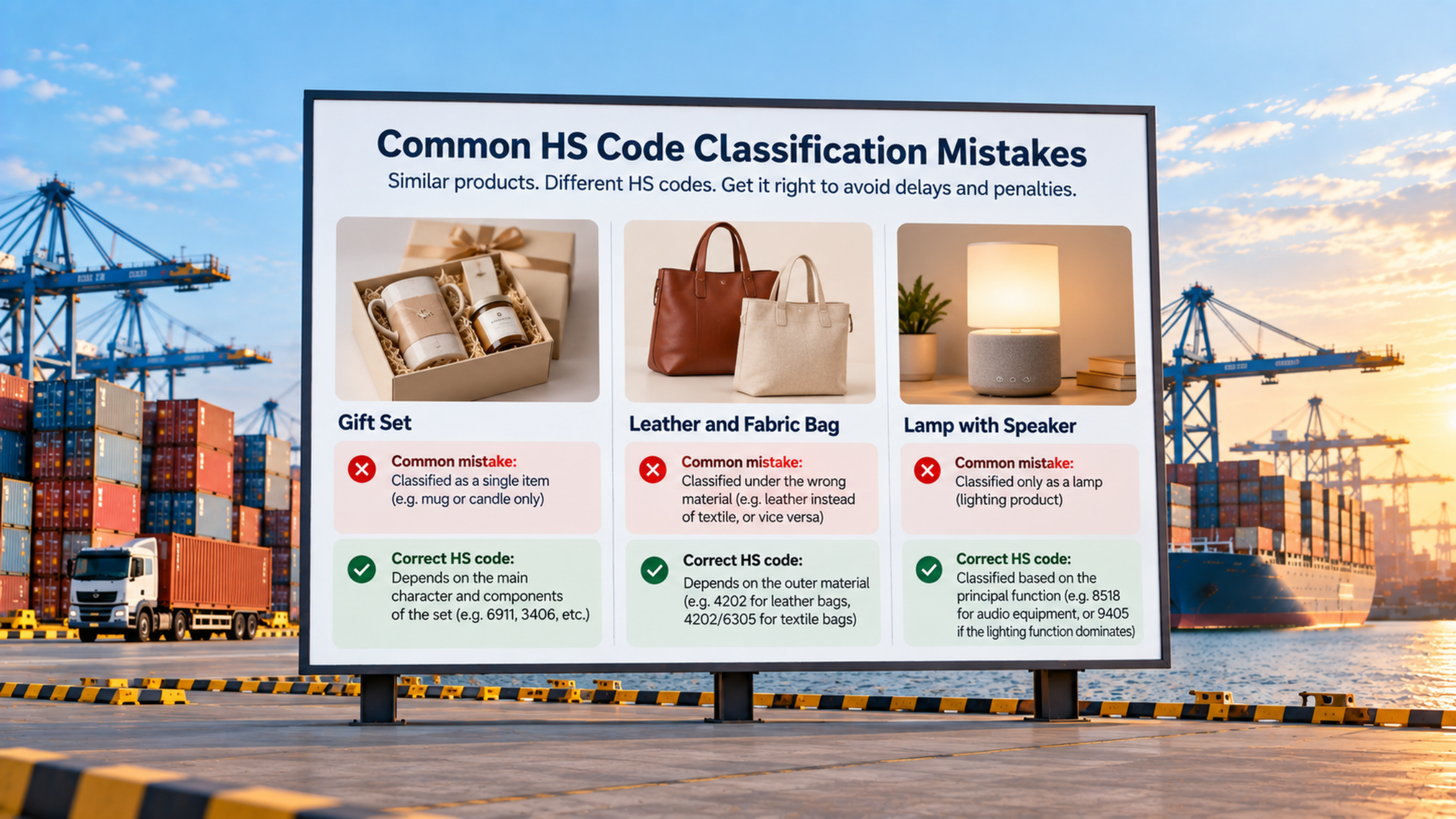
How to classify a product, step by step
1. Describe the product precisely. What is it made of? What does it do? How is it used? Is it a set, a part or a finished item?
2. Find the chapter. Chapters are grouped broadly by material or industry. Start there.
3. Read the heading notes and chapter notes. These are legally binding and often exclude items you might assume are included.
4. Narrow to the six-digit subheading. This is the international level, so it should be the same for your buyer's customs.
5. Find the national code. Use India's ITC-HS schedule for the export side and the US HTS schedule for the import side.
6. Check existing rulings. US Customs publishes past classification decisions in its online rulings database. If a similar product has been ruled on, that is strong guidance.
7. Write it down. Keep a short note of why you chose the code. If customs questions it later, a reasoned file helps.

Where a product could fit more than one heading, customs follows a fixed order of rules, called the General Rules of Interpretation. The first rule is that the heading text and legal notes come first. The more specific description beats the general one.
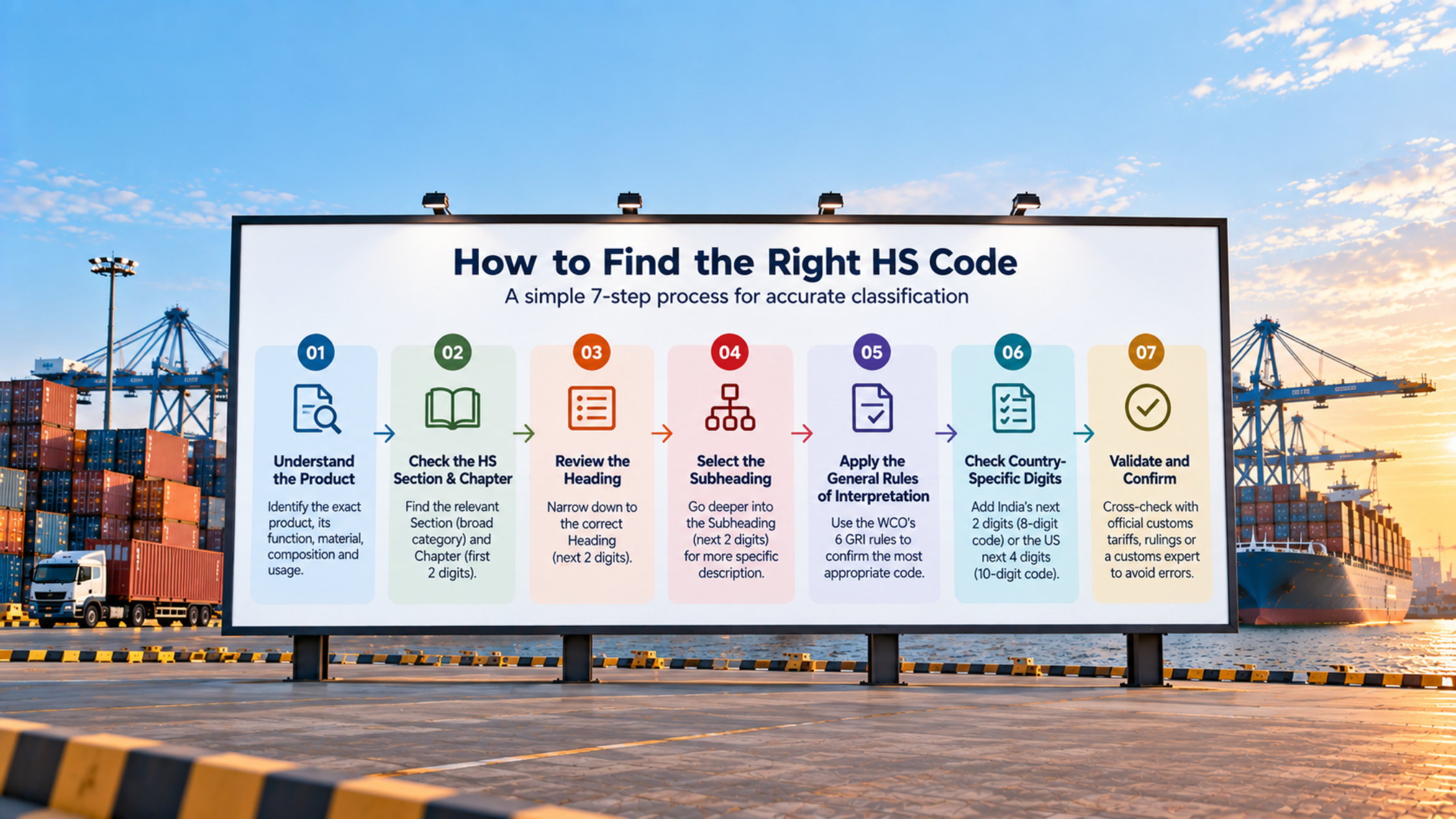
Products that are often misclassified
- Sets and kits, such as a gift box with several different items
- Parts and accessories, which may be classified with the machine or separately
- Multi-material products, such as a bag made of both leather and fabric
- Products with more than one function, such as a lamp with a speaker
- Textiles, where fibre content and knitted or woven construction change the code
What a wrong code costs
The cost depends on which way the error goes.

- Code too low: you pay less duty than you should. Customs can reassess the entry, demand the difference and add penalties. In the US, this can happen long after the goods have been sold
- Code too high: you overpay duty. You can apply to recover it, but only within set time limits, and many importers never notice
- Code questioned at the border: the shipment is held while customs asks for more information, and storage charges start building
Can I get a binding answer?
Yes. Both countries offer advance rulings.

- In the US, an importer can request a binding ruling from Customs before importing. It is free and applies to future imports of that product
- In India, advance rulings on classification are available from the customs advance ruling authority

For a product you will ship repeatedly, a ruling removes the guesswork.
Frequently asked questions
Is the HS code the same in India and the USA?
The first six digits should be the same. India uses an 8-digit code and the US uses a 10-digit code, and the extra digits differ.

Who decides the HS code, me or my freight forwarder?
Legally, the exporter and the importer are responsible for the code they declare. A good forwarder or customs broker will check it, but they need an accurate product description from you.

Where do I find the US HTS code?
The US International Trade Commission publishes the full Harmonized Tariff Schedule online, free.

What happens if customs disagrees with my code?
They reclassify it. You may owe extra duty and, if the error was careless, penalties. You can dispute it with evidence.

Should my invoice show the Indian or US code?
The shipping bill needs the Indian ITC-HS code. For a DDP shipment, the US entry needs the US HTS code. Many exporters show the six-digit code on the invoice and give both national codes to their forwarder.
Not sure your code is right?
Uni Traans Log checks classification as part of our customs work in India and the US. Send us your product description and current codes, and we will flag anything that looks wrong before your next shipment.
business@utlgroup.in   +91 7400155630