Air or ocean freight
Air or ocean? A practical way to decide, not a list of pros and cons
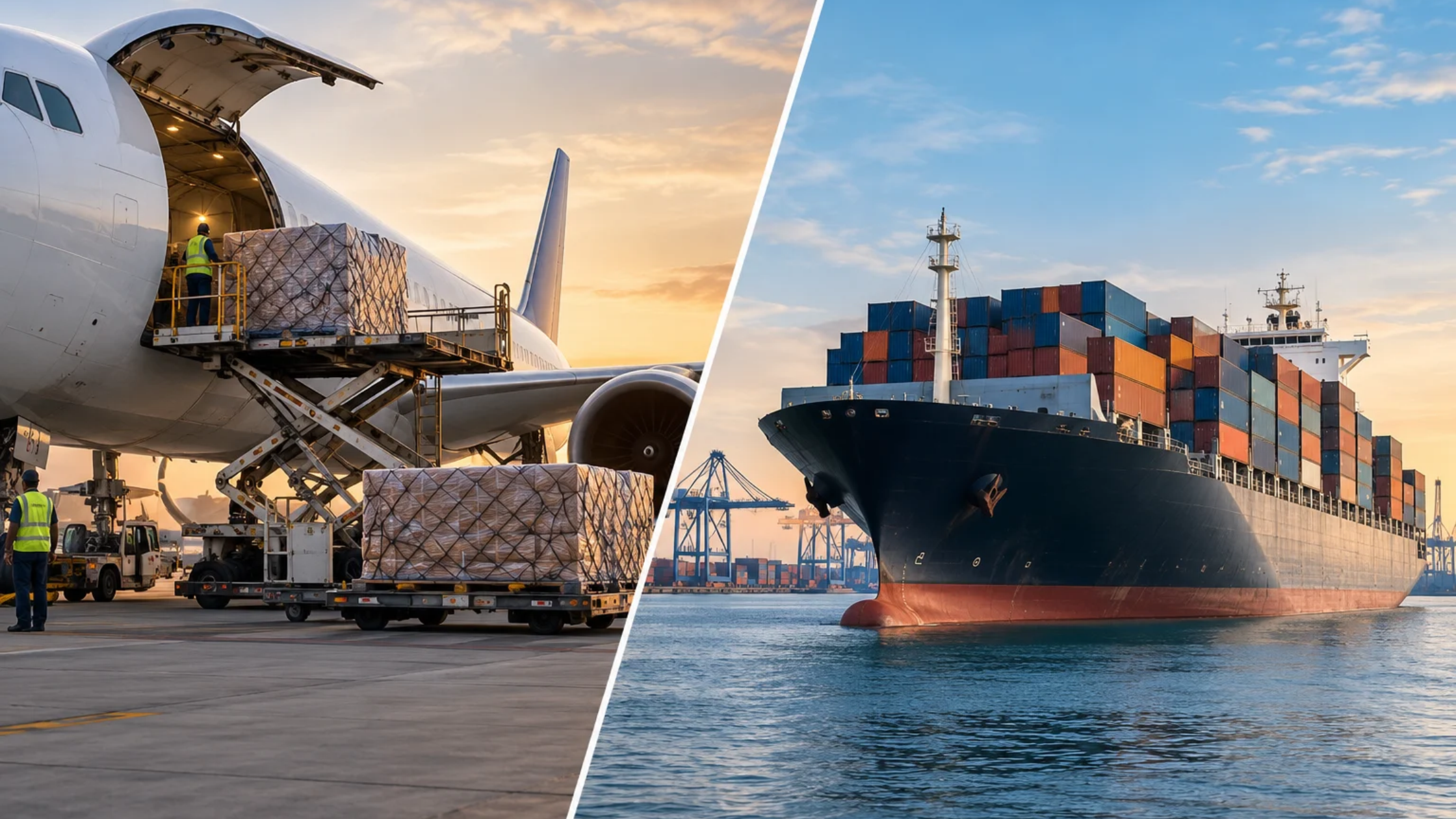
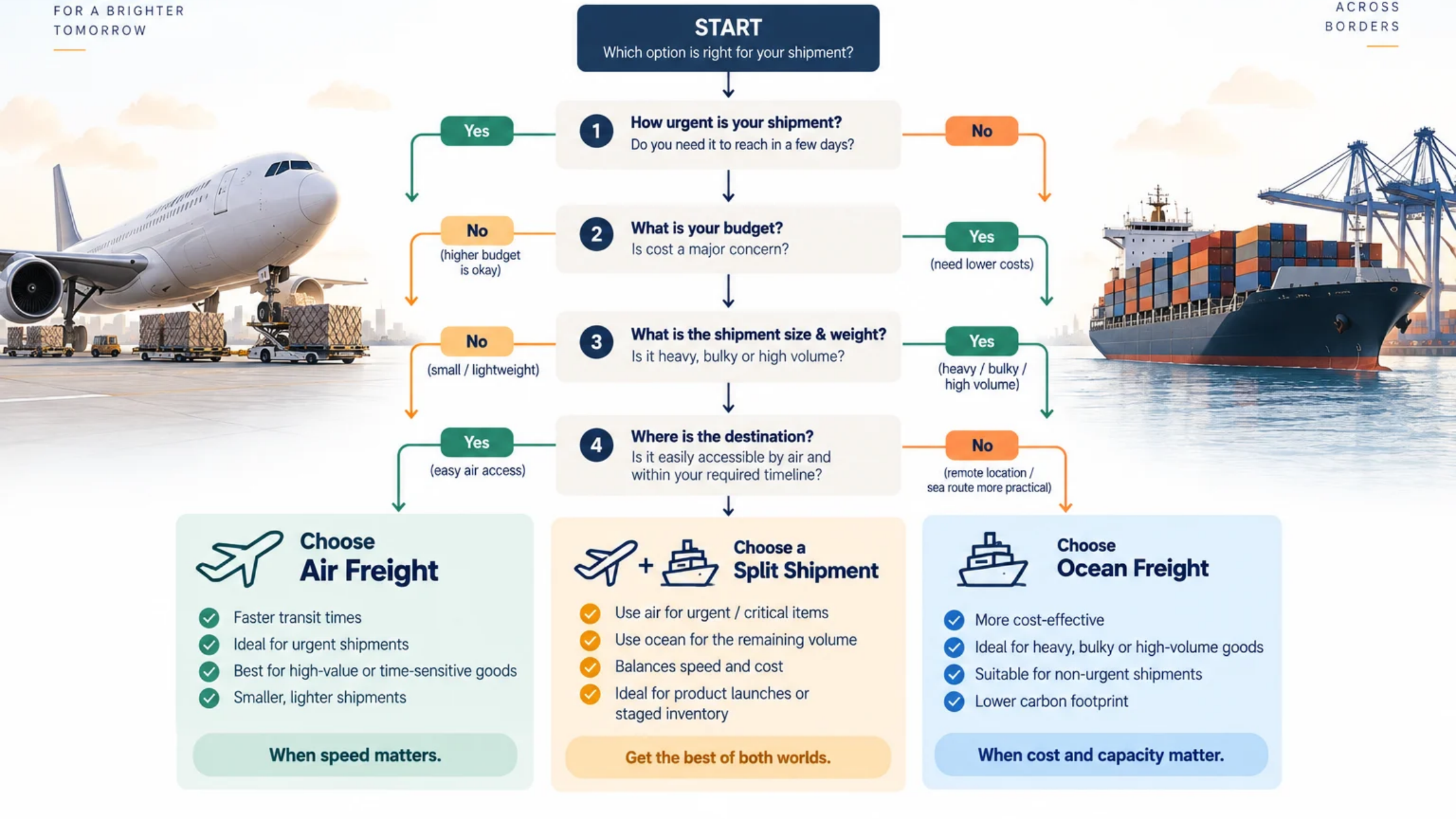
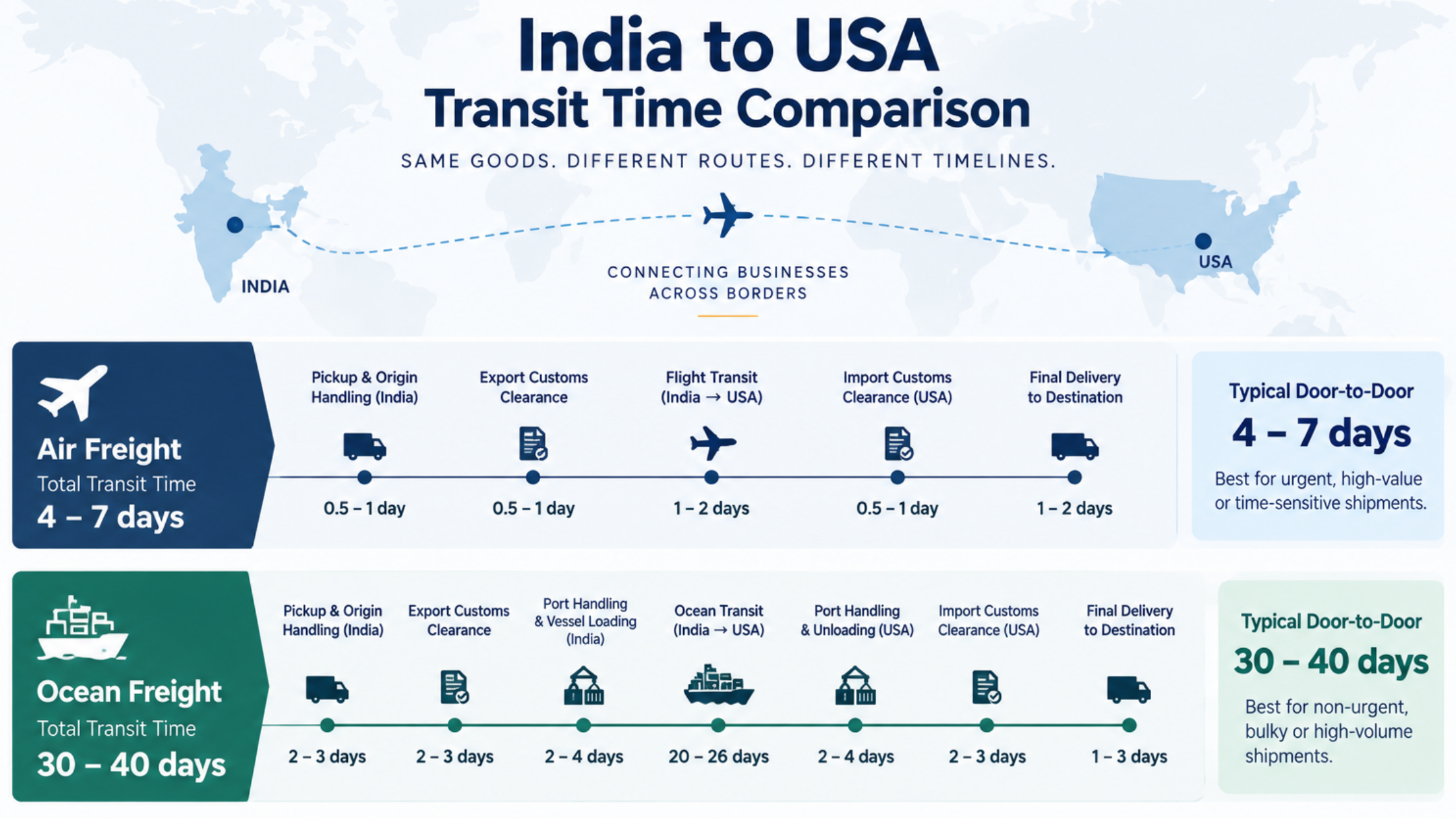
ocean is cheaper per kilo and slower. Air is faster and costs more. The useful comparison is not freight cost against freight cost, it is total cost including what the delay does to your business. For low value, high volume cargo ocean nearly always wins. For high value cargo, urgent replenishment or anything at risk of a stockout, air often costs less once you count the consequences.

Here is how to work it out rather than guess.
Step 1: Calculate chargeable weight
Air and ocean price cargo differently, and this trips people up more than anything else.

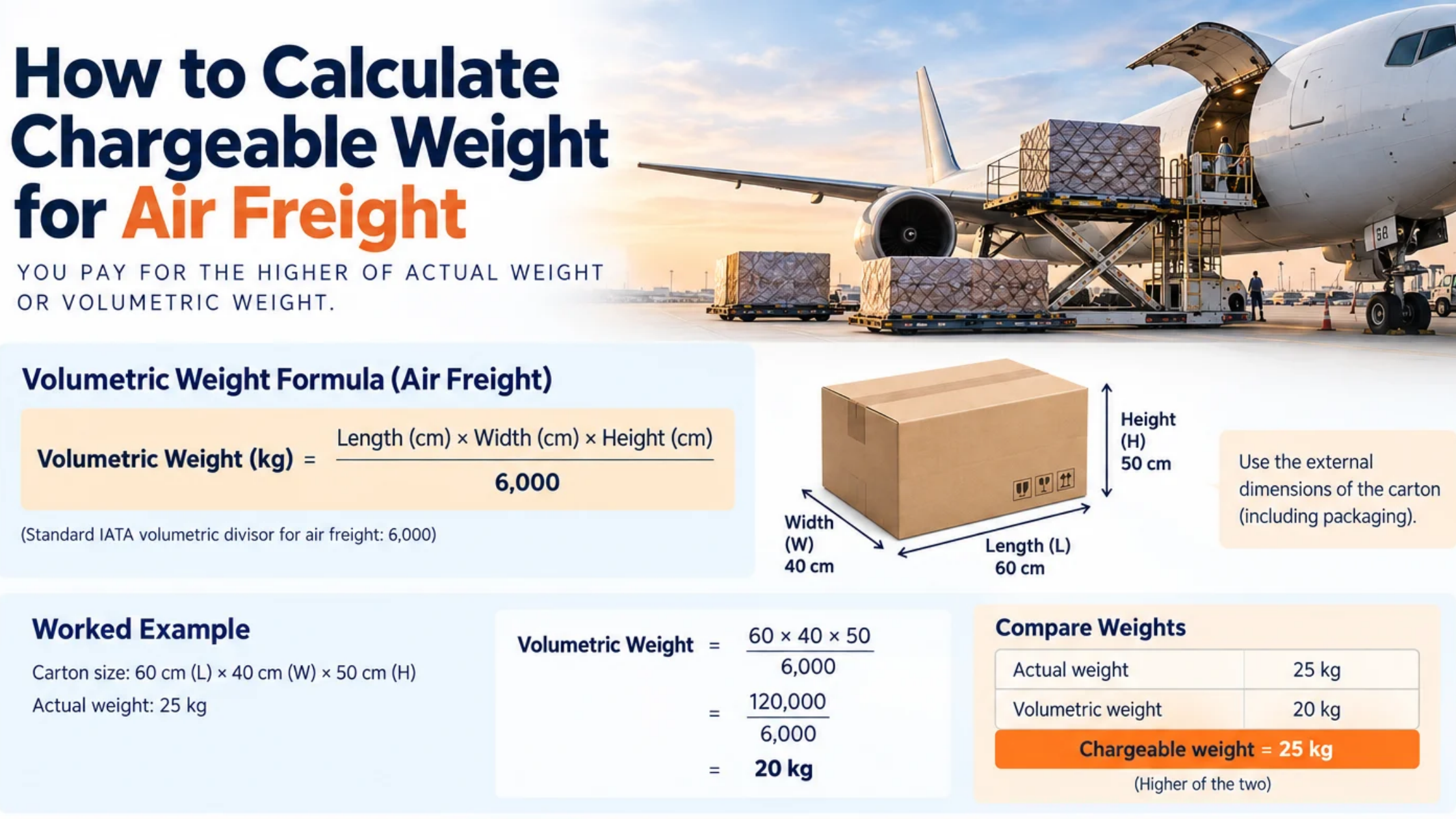
Air freight charges the higher of actual weight or volumetric weight. Volumetric weight is calculated as length x width x height in centimetres, divided by 6000, giving a figure in kilograms.
So a light but bulky shipment gets charged on its volume, not its weight. This is why pillows cost more to fly than steel parts.

Ocean freight for full containers is priced per container regardless of what is inside, within weight limits. For LCL, it is priced on whichever is greater, one cubic metre or one tonne.
Before comparing any quotes, calculate your chargeable weight for each mode. Comparing an air rate per kilo against an ocean rate per CBM tells you nothing.
Step 2: Work out the freight difference
Get both quotes on the same basis, all inclusive, door to door.
Then divide the difference by the number of units in the shipment. This gives you the extra cost per unit of flying instead of sailing.

That per unit number is the one that matters. A difference that looks alarming at shipment level often turns out to be a small amount per piece.
Step 3: Work out what the time is worth
This is the step most people skip.
Ocean freight from India to the US typically runs 30 to 40 days port to port. Air runs a few days. Call it a month of difference.
What does a month cost you?

If you hold stock and demand is steady: a month of extra transit means a month of extra inventory sitting in the pipeline, tying up working capital. Real, but manageable.

If you are about to run out: the calculation changes completely. A stockout on an ecommerce listing costs you sales, and on Amazon it costs you search ranking, which takes weeks to rebuild after the stock returns. The freight saving disappears against that.

If your buyer has a penalty clause or a fixed delivery window: the cost of being late is written into the contract. Compare against that number.

If the product has a season: stock that lands after the season is worth a fraction of stock that lands during it.
Step 4: Consider the split
The answer is often not one or the other.

Send the bulk by ocean and a smaller quantity by air to bridge the gap. You pay the air premium on a fraction of the volume and still keep selling.

This is standard practice for ecommerce sellers and it is usually cheaper than either pure option.
When air is the obvious answer
- Cargo value is high relative to its weight
- You are close to a stockout
- The product is perishable or temperature sensitive
- There is a contractual delivery deadline
- The shipment is small enough that ocean's fixed charges dominate

Air cargo demand grew 8.5% year on year in June 2026, driven largely by high value and time sensitive goods, so this thinking is not unusual.
When ocean is the obvious answer
- Volume is large and value per kilo is low
- The delivery date is comfortable
- Cargo is oversized, heavy or classified in a way that complicates air
- You are restocking to a plan rather than reacting to a shortage
The mistake to avoid
Deciding once and never revisiting. Rates move. Ocean rates in particular have swung significantly through 2026, with carriers managing capacity and surcharges appearing at short notice.

A comparison you did in March may not hold in September. For any significant shipment, get both quotes and run the numbers again.
Frequently asked questions
How is chargeable weght calculated for air freight?
Take length x width x height in centimetres and divide by 6000. Compare that figure to the actual weight in kilograms. You are charged on the higher one.

How much longer does ocean freight take than air?
On the India to USA lane, roughly 30 to 40 days by sea against a few days by air, before adding clearance and delivery at both ends.

Is air freight ever cheaper than ocean?
For very small shipments, sometimes yes, because ocean has fixed origin and destination charges that do not shrink with volume. Always compare door to door totals, not freight rates.

Can I split a shipment between air and ocean?
Yes, and for ecommerce restocks it is often the smartest option.

Does air freight have weight limits?
Aircraft have limits on individual piece weight and dimensions, and they vary by aircraft type. Tell your forwarder your piece dimensions early.
Want both options priced?
Uni Traans Log quotes air and ocean side by side on every enquiry, with real transit times, so you can decide on numbers rather than assumptions.

Send us your shipment details:
business@utlgroup.in   +91 7400155630